
Campaign to Save Walton-le-Dale’s Royal Lime Trees
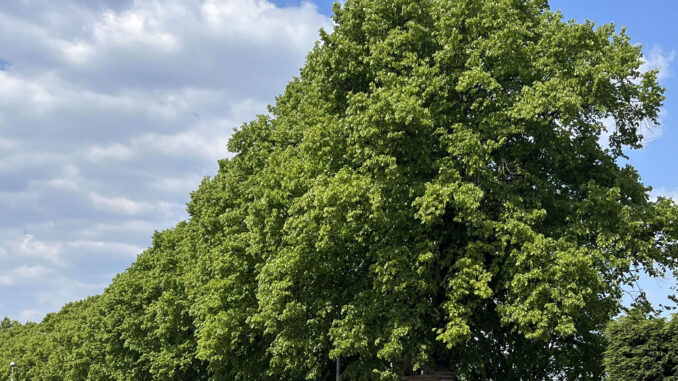
More than 7,000 people have backed a campaign opposing plans to remove 18 of the 21 Royal Lime trees on Victoria Road. The trees, planted in 1912 to commemorate the coronation of King George V, are threatened by proposals linked to the Preston & South Ribble Flood Risk Management Scheme. While the Environment Agency says removal is necessary to deliver flood protection works, campaigners argue that alternative solutions exist and have applied for a judicial review of the planning approval.
Why Are Thousands of People Campaigning to
Save Walton-le-Dale’s Royal Lime Trees?
More than 7,000 people have signed a petition opposing plans to remove a number of historic lime trees in Walton-le-Dale.
The petition can be found on the 38 Degrees website:
https://you.38degrees.org.uk/petitions/save-the-royal-limes-in-walton-le-dale
The trees stand on Victoria Road beside the River Ribble and were planted in 1912 to mark the coronation of King George V. They have become a well-known local landmark and are commonly referred to as the Royal Limes.
Under proposals connected to the Preston & South Ribble Flood Risk Management Scheme, the Environment Agency (EA) intends to remove 18 of the 21 trees. Planning approval for the work has been granted by South Ribble Borough Council, although campaigners have begun legal proceedings seeking permission for a judicial review of that decision.
Why are the trees significant?
The Royal Limes are located opposite the Yew Tree public house and have been part of the local landscape for more than a century.
Campaigner John Hull said: “The trees form part of the heritage of the area – they are part of Walton-le-Dale’s identity and part of our landscape.
“There are of historical importance and they are known locally [and] affectionately as the royal limes or the 21 gun salute.”
Why does the Environment Agency want to remove them?
According to the Environment Agency, the trees would need to be removed to allow construction of new flood defences designed to reduce flood risk to homes and businesses in the area.
The agency says the size and spread of the root systems, together with the trees’ location within the proposed working area, make it impractical to retain them during construction.
The EA stated: “We understand the strength of feeling for these trees from the community and we’ve taken 180 cuttings to grow at a nursery and replant in the area.”
Are alternative solutions available?
The Environment Agency maintains that no alternative option has been identified that is financially viable.
It said: “Our priority is protecting hundreds of Walton-le-Dale homes and businesses from the devastating effects of flooding and felling trees is always our last resort.
“We can’t carry out construction from within the River Ribble due to the risk of causing environmental harm to the river, its wildlife, and the surrounding land.
“Relocating the works further inland is also not feasible, as the road carries essential utilities and regionally significant communications cables.”
However, campaigners argue that other engineering solutions should be considered.
Guy Shackleton of the Save the Royal Limes Action Group said the group believes alternative approaches could “protect the trees and the ecological benefit of them”.
He said such options could also avoid an estimated 18 months of complete road closure.
Shackleton added: “We have engaged… with consultant civil engineers and they have a strong belief there are alternatives that yes, could well incur costs but would prevent the destruction and removal of the trees.”
What happens next?
Although planning permission has been granted, a timetable for the work has not yet been announced.
Campaigners are continuing their efforts to challenge the decision through the courts by seeking a judicial review of South Ribble Borough Council’s approval of the scheme.
