
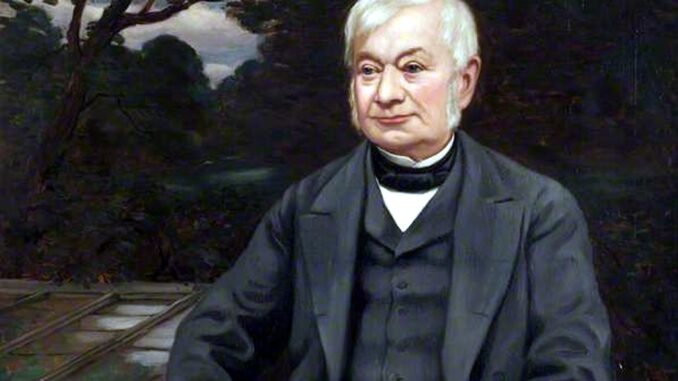
J. LIVESEY’S ANNUAL TEMPERANCE ADDRESS, 1882.
The following is a copy of this address:-What a glorious thing it would be if the people of England were all sober, perfectly sober. always sober! What a blessing it all the working men would take their wages homes for the good of their families, instead of spending them upon drink! What happy homes we should have if mothers would cease sending their jugs for beer; if none of our females would ever call at the dram shop or beer shop, mothers and daughters setting a good example of sobriety, cleanliness, and good household management! What a delightful prospect we should have for the prosperity of the nation, if our young men would cease to spend their time and money at the public-house; if they would keep good company, and lodge their surplus wages in the Savings Bank! How cheering it would be to see friends congregate together on social occasions without intoxicating drink, such as bazaars, flower shows, balls, anniversaries, presentations, christenings, weddings, funerals. It is the intoxicating cup that destroys the good order, peace, harmony, social enjoyment, and happiness of parties on these occasions. At present nearly all the time of our magistrates at the Petty Sessions is taken up with the crimes brought on by drink, exhibiting scenes the most distressing. What rejoicing there would be if the clergy could do the work of the magistrates. Saturday night rows would then be unknown, and the Sunday clothes of working men would be at home instead of being imprisoned at “my uncles.” The dirty, idle, drinking men who now disgrace our streets on Monday would he at work, and lots of machinery which now stands still through the man being off drinking would be fully employed. More than half of the police might go back to their normal employments. The poor law and the prison officials might be put on half time. The 120 millions of money now spent upon drink at public and private houses-upon beer, wine, and spirits, would go into the hands of batchers, bakers, grocers, drapers, tailors, shoemakers, and all other useful tradesmen.
There cannot be a good “home trade” while the people keep drinking. Parents would provide for the education of their children; the schoolmaster would be patronised, and School Boards would scarcely be needed. Churches and chapels would be well filled, and the whole country would be distinguished for its peace and good order!
There is nothing visionary in all this. There is no mystery about it; the causes of our non-sobriety are well known. We are not suffering from some natural calamity; from pestilence, famine, or any of the afflictions of nature; it is from our own wanton folly and visibusness, and whenever we decide to be governed by reason and common sense, sobriety, national sobriety, will be our But there is a hard battle to happy portion at once be fought; a world of work to be done, and we must be patient as well as persevering. We have erroneous opinions, the growth of ages, to confute, at one time too much encouraged by the doctors; we have the imperious dictates of fashion to grapple with, kept up by thousands against their own convictions; and, worse still, if possible, we have an almost universal love of liquor, a desperate appetite for stimulating drink, a longing for nonatural life and temporary animation to contend against. We have all these against us, and were it not for the truth of our principles, and the manifest good they have promoted, wo might faint in the contest. All those difficulties, however, bespeak a great amount of patience, forbearance, and pity, towards those whom drink has mis-lead, and a great amount of work to be done in order to effect their deliverance. The teetotalers must lead the way. They must work harder than ever, and I hope they will do so. They must work in the right way and in the right places, never fearing opposition, never caring for the frowns of the fastidious, never seeking the favour of man. The more good they can do; the greater number they can induce to forsake the service of Bacchus, and the happier they will feel in their own souls.
I fear the important duty of visiting the drinkers by the temperance people is much neglected. The prosperity of our societies depends more upon this than most of our friends are aware. In our periodicals rarely do we find any record of this work or articlos urging its performance. The annual reports issued by our large organisations or subordinate societies scarcely ever advert to the duty of visitation. Much time is taken up in expounding and describing the evils of intemperance, and exciting hatred of the drinking system, but the duty and curative influences of extensive visitations seem to have been overlooked. Judging from the speeches and sermons delivered, many think that a great deal of important temperance work is being done; but if we come carefully to investigate the matter, and especially if we judge by the condition of the masses, we arrive at a much more unfavourable conclusion. Let us take our large towns, and by enquiry we shall find that in nearly all our back streets the voice of temperance is scarcely heard that the drinkers are not visited or admonished that nearly all, especially the females, are awfully neglected; the common people are like sheep without a shepherd.
Adverting to the condition of the masses and to the neglect of those above them, the Rev. V. Arnot said “The Christian Church has been basking itself in the sunshine over an appalling mass of moral and spiritual degradation. The surface of it has yet barely been scratched. Women and children are being slowly and surely murdered within sound of our hymn-singing.” Speaking of the great gulf existing betwixt the Church and the masses of the common people he said they might as well be living in “another planet.” The fact is that the greatest numbers of those who are ruining themselves by drink and are sank in wickedness will not come to us, and therefore we must go to them. There ought not to be, and there need not be, a drinking man untaught nor a drinker’s house unvisited. If the ministers of religion would determine upon this and take the lead, in every congregation there is a number who would be glad to engage in the work. We should do well to remember the unceasing self-denying labours of the Apostles and first Christians. If ever we expect to make this country sober, there must be fifty times more labour than at present. We are apt to go on in a formal manner, depending upon central meetings, large and imposing organizations, and praying for parliamentary relief; instead of every one individually putting his own shoulder to the work. We are in danger of being deceived by the glowing accounts given at some of our meetings as to the work which is being done by some sections of the Chris-tian Church. There is one man, and but one, who can tell us the exact truth as to this, and that is the Chancellor of the Exchequer. The figures in his annual balance sheet contain the only reliable statement as to the progress of temperance. Above 120 millions of good money is annually spent upon bad drink!
Without doing less in other departments, what I would urge is, & far greater amount of visitation. Most of the drinkers can be reached by no other means, and the young converts require to be often visited. Ministers and others ought not to think of doing this by deputies. Every one who has the “care of souls” should visit the drinkers of his charge just as the good shepherd did his one lost sheep out of the hundred. Some of our teetotalers may visit on week-day evenings; some on Sunday afternoons, but taking other things into account, I always found Sunday forenoons the best. Visitors may go singly or two and two, and it is very encouraging to have a central place to start from, where the visitors can see and encourage each other. If only as many as two from each place of worship would spend two hours every Sunday forenoon, an untold amount of good would be sure to follow.
We must work far harder than we have been doing; we must get to the places and to the persons where the worst features of the drinking system abound. The street, the workshop, the drinker’s cottages should never cease to be the mission ground for teetotalers, and in our towns the Slums, above all other places, should be constantly visited. We must get amongst the drinkers, and fearlessly as well as affectionately try to get hold of the multitudes who are now being ruined by strong drink. More than ever convinced that the primitive plan of working was the best -to visit all the back streets; to teach and preach abstinence in every nook and corner of the land; to hold numerous meetings, though over so small; to leave no drinker or drinker’s house unvisited. Nothing less than this will do. Our conferences are of little value if they do not result in real active exertions to convert the masses to the practice of abstinence. The formating of temperance societies, with patrons, presidents, vice-presidents, secretaries and funds, as little else than mero show if they aim at less than this. The holding of great meetings is only useful if they stimulate is to be more zealous in working in a proper way for the good of the masses. With a system so good, principles so sound, a truth overflowing with blessings, and proofs on every hand of its efficacy to save the wretched slaves of strong drink, wo cannot, we must not remain in our present formal easy-going condition. We shall succeed when we deserve to succeed when we set about our work in real good earnest. The second great commandment is” Thou shall love thy neighbour as thyself.” There is no want of self love with most people, but if our “neighbour” includes the poor, the degraded, the suffering, the last, the wicked, where are the proofs of our love for such? Where are our self-sacrifices for their good? It is the neglect of this great commandment-the want of sympathy towards the masses-that the present condition of the Temperance Societies is to be attributed. Faithful scavengers don’t spend their time in sweeping only in clean places; they labour hardest where the greatest amount of dirt is to be found. Doctors don’t care epidemics by sitting in their studies; they go promptly to the places where disease is most virulent and visit and re-visit until it is cured. This is what the temperance people must do. We want more heart in the cause; we want a deeper feeling; more sympathy for our fellow-creatures. Religion of form and fashion is prevalent enough, but we want something less showy and more like that which distinguished the good Samaritan. Animated by this spirit, we should visit the slums and back streets, where-so to speak-men are stripped, wounded, and half dead. The drinkers are really in a pitiful condition, and the fault, if traced, is not entirely their own, but often attributable to the want of being visited and properly taught to the want of good advice and good examples. The drinkers in a neighbour-hood are left to corrupt and ruin one another; scarcely noticed till some outrageous act is committed, perhaps a murder, the result of drinking. When the criminal is doomed to be hanged, the minister can then attend to him night and day, though the poor fellow was never visited before.
But on the ground of humanity and religion we might hope that all religious people would be deeply impressed with the sufferings seen on every hand, brought on by drinking, and not only sympathise with the sufferers, but eagerly adopt every course of action, though ever so self-denying, calculated to do them good. The example of Christ stands out in bold relief; He ever sought after the poor, the distressed, the fallen, and the lost. Publicans and harlots and great sinners were those He was found among, always touching them, doing them good, showing compassion and forbearance to the vilest sinners. It we would follow His stops, it is impossible we can sit and enjoying our ease at home, while our fellow-creatures, close by, are going to ruin. Looking at the number and power of the agencies in favour of the drinking system, and at the prevailing ignorance, appetite, fashion, and interest, it is obvious that our present poor labours are but as a drop in the bucket towards making the country really sober.
Owing to my impaired health, I have been compelled to avail myself of help from some of my former works, but I hope it will be seen that my devotion to the principles of our good old cause remains as firm as ever.
Reader! Let me entreat you to reduce to practice all you read, and then you will become a real staunch teetotaler; you must also try to make the same impression upon as many others as you possibly can.
J. LIVESEY.
~
J. LIVESEY’S ANNUAL TEMPERANCE ADDRESS, 1882.
Date: Saturday, Dec. 31, 1881
Publication: Preston Chronicle
Gale Primary Sources, British Library Newspapers:
https://link.gale.com/apps/doc/Y3207494526/BNCN?u=lancs&sid=bookmark-BNCN&pg=2&xid=8e9c792e