
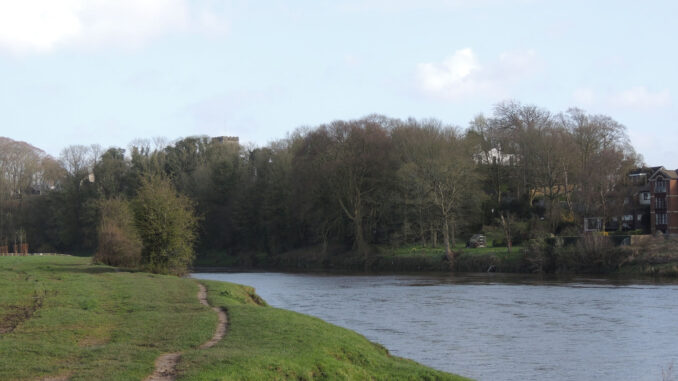
Ribble Rivers Trust have been working in partnership with the Environment Agency Preston City Council and local farmers to plant 8451 native trees in the riparian strip at Fishwick Bottoms. These trees will be fenced off from the surrounding farmland protect them from browsing pressure, and will provide new habitat for riparian species Working closely with the Angling Trust, we hope to raise awareness for and encourage respectful use of the site.
Habitat Creation
The trees that we plant will create new habitat for woodland birds, bats, and invertebrates. Without constant grazing, the riparian vegetation will begin to grow back, solidifying the banks and preventing further erosion. The trees will also help shade the river, preventing fish from overheating on sunny days.
Working with Local Farmers
The Trust is working with local farmers all over the catchment to implement infrastructure changes that prevent pollution and protect water quality. By fencing waterways off from cows and providing watering troughs for the farmer, we protect the banks from erosion and prevent sewage from entering the watercourse.
Natural Flood Mitigation
Trees help to prevent flooding by absorbing and trapping excess water. They also help to conserve fertile soils by preventing runoff.
Angling at Fishwick
Fishwick Bottoms is a free stretch of river, meaning that anyone can catch fish here so long as they hold a rod licence. Environment Agency and Angling Trust river bailiffs patrol this area, making sure that people wishing to fish here are doing so respectfully and in accordance with angling laws. The Angling Trust also carry out litter picks along this stretch to help prevent build up of rubbish in the river. You can expect to find barbel, chub, roach, dace, bream, pike, eel, and perch. Salmon, carp, and sea trout are also present, but rare.
~

~
A riparian strip (or buffer) is a vegetated zone of trees, shrubs, and grasses adjacent to water bodies—rivers, streams, and lakes—that acts as a natural buffer between water and land. These areas filter pollutants, reduce nutrient runoff by up to 80%, stabilize banks, reduce flooding, and provide essential habitats.
~
~